Seed Catalog Triage: Choosing Disease-Resistant Plant Varieties Without the Overwhelm
Dear friend,
If you garden at all, you’ve probably had this moment: it’s winter, and there’s a stack of seed catalogs on the table like a bright, seductive promise. The photos are perfect. The descriptions read like poetry. Everything looks so easy and so abundant that you can almost forget what July feels like—the heat, the humidity, the suddenness of disease, the way a beautiful plan can get humbled in a single week of wet weather. This is why experienced gardeners quietly prioritize disease-resistant plant varieties long before spring planting ever begins.
Seed catalogs are hope, but they can also be a trap.
Not because there’s anything wrong with dreaming. Dreaming is part of the work. But the catalogs aren’t written to protect your time, your budget, or your sanity. They’re written to sell you seeds, and they’re very good at it. If you’ve ever ordered fifteen tomato varieties and then realized you only have room for six plants, you know what I mean. If you’ve ever planted something “new and exciting” only to watch it fold under our summer disease pressure, you know what I mean too.
So this week I want to offer a calmer approach—what I call seed catalog triage. The goal isn’t to eliminate joy. It’s to keep joy from turning into chaos.
The first thing I do when I sit down with catalogs is remind myself what I’m actually trying to accomplish. Starting with a few carefully selected disease-resistant vegetable seeds can make that planning much easier, giving you reliable crops while staying aligned with your goals. Not in a lofty sense, but in a practical sense. Am I trying to feed a household? Am I trying to have steady harvests instead of one big glut? Am I trying to grow cut flowers for bouquets? Am I trying to trial new varieties, or am I trying to reduce failure? Am I gardening with limited time, limited water, limited sun, or limited patience? The answers matter, because “what you should grow” is never universal—it’s always tied to your goals and constraints.
In Western North Carolina, there’s one constraint that quietly shapes everything: humidity. Humidity isn’t just uncomfortable; it’s a biological force. It favors fungal diseases. It changes how leaves dry. It affects which varieties thrive and which varieties limp along. It’s part of why a variety that performs beautifully in a drier climate can struggle here. If you want to reduce heartbreak, you have to treat humidity as a primary design condition, not an afterthought.
That’s where disease resistance becomes a gift.
Disease resistance isn’t glamorous. You won’t see “disease-resistant” described with the same romance as “old-fashioned flavor” or “rare heirloom.” But it’s the difference between a plant that gives you fruit and a plant that becomes a lesson. In our climate, choosing the right resistance package can turn a frustrating crop into an easy one.
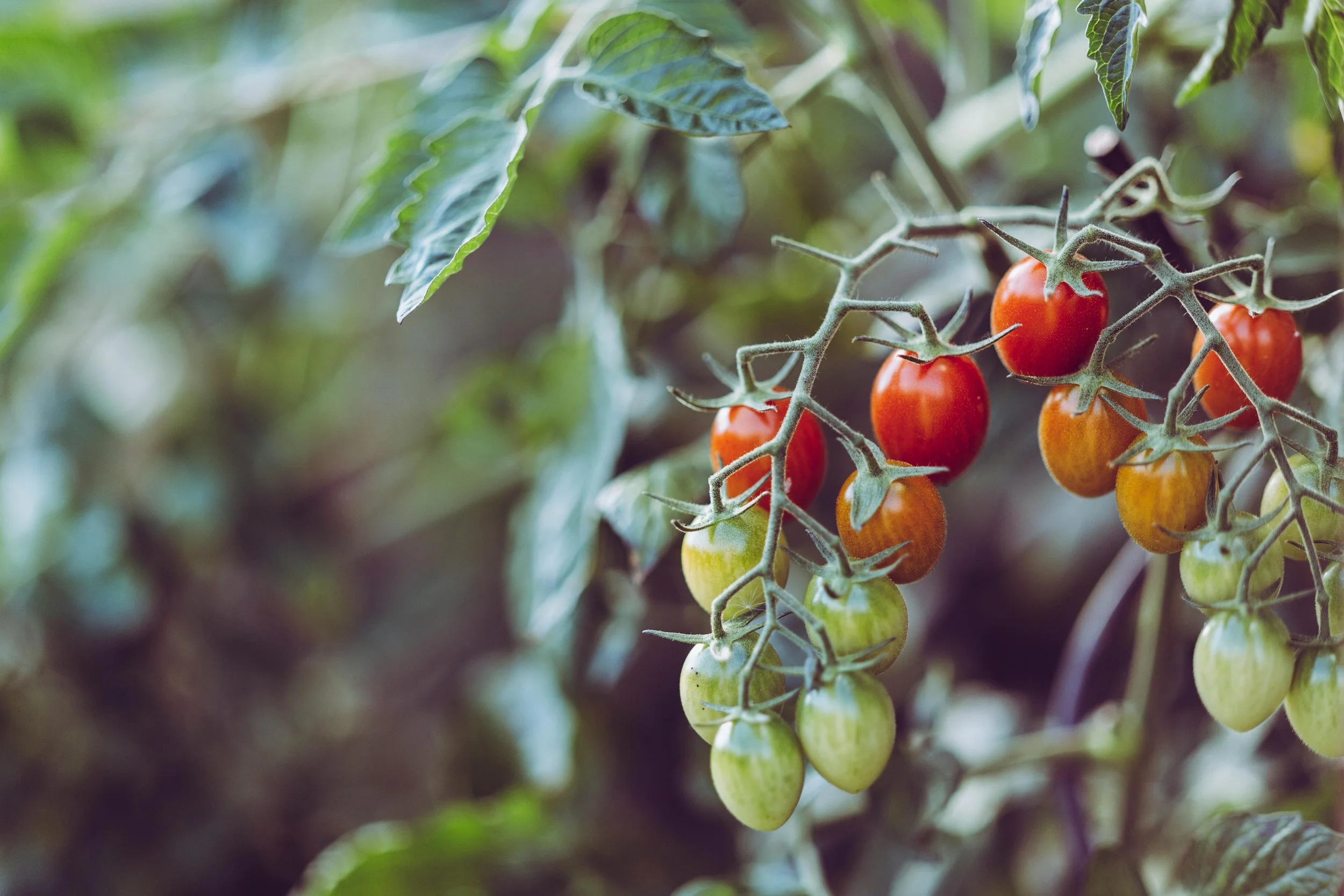
Tomatoes are the classic example. We love tomatoes so much that we keep planting them even when they break our hearts. But not all tomatoes suffer equally here. Some varieties are simply better suited to deal with common issues like early blight, late blight, septoria leaf spot, fusarium wilt, verticillium wilt, nematodes, and bacterial speck or spot. Trying a few disease-resistant tomato varieties can save you from disappointment when the summer hits. You’ll see resistance information in catalog descriptions—sometimes as a string of letters that looks like code. It is code, but it’s useful code. It’s the seed company telling you what the plant has been bred to withstand.
Now, resistance isn’t immunity. It’s not a magic shield. But it can buy you time, reduce severity, and keep your plants productive longer. In a humid summer, “productive longer” is everything.
Here’s the more subtle thing about disease-resistant plant varieties: they support better gardening habits. When you’re not constantly battling disease, you can focus on good spacing, airflow, watering at the root zone, mulching, and balanced fertility. You can observe instead of panicking. And those habits—those boring, consistent habits—are what make gardens thrive long-term.
This is where triage comes in. I like to divide my seed choices into three quiet categories, even if I never write the categories down. There are my “reliables,” my “joy plants,” and my “experiments.”
The reliables are the foundation. They’re the varieties I can count on for yield and performance. Many of those reliables are disease-resistant plants that have proven themselves over time. They may not be the most exotic, but they do their job. In a vegetable garden, reliables might include disease-resistant tomato varieties, dependable peppers, greens that handle temperature swings, beans that germinate reliably in warm soil, and herbs that are forgiving. In a flower patch, reliables are the producers—the ones that bloom steadily, hold well in a vase, and don’t collapse at the first sign of heat or mildew.
Joy plants are the ones I grow because they make my heart happy. Maybe they’re heirlooms with extraordinary flavor, even if they need extra care. Maybe they’re a flower that feels like childhood. Maybe they’re something that doesn’t make strict practical sense but makes you want to walk outside. Joy matters. A garden without joy turns into chores.
Experiments are the ones I try with the understanding that they might fail. That’s important. The moment you mentally label something an experiment, you stop taking its failure personally. You learn instead of sulking. You also protect your season, because you’re not gambling your whole harvest on something unproven. Including a few disease-resistant plant varieties in your experiments can give you a safety net without dampening your curiosity.
Triage is about getting those proportions right. In a year when you’re busy, or when you’re rebuilding, or when you just want a win, you lean heavier on reliables. In a year when you have time and curiosity, you give more room to experiments. But you decide consciously, instead of letting the catalog decide for you.
Another key part of catalog triage is matching plants to your real planting windows. In our region, spring can be generous one year and stingy the next. Summer heat arrives in its own time. Fall can be long and mild, or it can turn sharp early. When you choose varieties, pay attention to days to maturity, but treat that number as a rough estimate rather than a promise. Days to maturity are usually measured under specific conditions that may or may not resemble your garden. Still, they’re helpful for building a rhythm—especially for succession planting. Pairing that timing with a few disease-resistant plants can reduce frustration when the season doesn’t behave as expected.
If you’ve ever had everything ripen at once and then nothing for weeks, you know why rhythm matters.
This is also where the “overwhelm” can creep in. Focusing on disease-resistant plant varieties can simplify decisions, letting you prioritize choices that are likely to succeed. Because once you see all the options, it can feel like you need to optimize every choice. Resist that urge. Gardening rewards consistency more than optimization. A good, repeatable plan will outperform an overly complex, constantly shifting plan almost every time.
So here’s a gentler way to choose:
Start with the crops you know you’ll actually use. If you don’t eat eggplant, don’t plant it just because the photo is pretty. If you love basil, plant enough basil to make pesto and give some away. If you always end up buying salad greens because you ran out, make greens a priority. For example, selecting a few disease-resistant cucumber varieties can ensure fresh, crunchy cucumbers straight from your garden. Let your kitchen guide you.
Then choose varieties that fit your site. Full sun is different from part sun, and part sun in the mountains can still be bright, depending on your exposure. Soil that holds moisture is different from soil that drains fast. Wind exposure is different from sheltered. Deer pressure changes everything. The catalog won’t tell you those truths; your yard will.
Once you’ve chosen what you’ll actually use and what fits your conditions, then you can add the fun. That’s when you choose that one wild heirloom tomato you’ve always wanted to try, or that flower that feels like a little bit of theater. Even in the midst of fun and experimentation, a few carefully chosen disease-resistant plants can keep the garden productive.
And when it comes to disease resistance, think of it as an insurance policy. You can still grow an heirloom tomato. You just don’t want your entire tomato season to be heirlooms if you’re in a high-pressure spot. Mix it. Give yourself a backbone.
There’s also a quiet truth about disease resistance that’s worth saying: it pairs beautifully with good cultural practices, but it doesn’t replace them. If you choose a disease-resistant variety and then plant it too close, water overhead in the evening, and let foliage stay wet for hours, you’ll still have problems. The plants aren’t meant to compensate for everything. They’re meant to give you a stronger starting point.
Seed catalog triage, at its best, is just a form of self-respect. It’s you saying: my time matters, my energy matters, and I want a garden that supports my life instead of consuming it.
And in winter, when everything is quiet and you have a moment to plan, you can build that kind of garden on purpose.
If you’d like help choosing varieties that fit your site and your goals—especially disease-resistant performers that thrive in our Blue Ridge conditions—visit our website to schedule a consultation. We’ll put together a planting plan that feels realistic, resilient, and genuinely enjoyable to grow.