How to Remove Invasive Plants in the Blue Ridge: Early ID and Strategies That Stick
Dear friend,
There is a moment in early summer, right about the time the woods look fully dressed and the roadsides start to glow, when a gardener can feel proud and uneasy at the same time. Proud because everything is green and vigorous. Uneasy because you know some of that vigor is the wrong kind. For many property owners, this is also when questions about how to remove invasive plants start to become urgent.
In Western North Carolina, we live in the sort of landscape where plants do not need much encouragement. Moisture comes in generous pulses. Heat arrives steadily. Disturbance is everywhere: a new driveway, a storm-toppled tree, a scraped bank where water ran hard, a sunny opening created when a canopy shifts. And every disturbance creates a welcome mat for opportunists. Those disturbed areas are often where invasive plants in North Carolina establish themselves first before spreading into surrounding landscapes.
When folks ask me why invasive plants feel so relentless here, I usually say this: they are not just plants. They are strategies. They are good at moving into the exact conditions we keep creating, and they are good at turning our impatience into their advantage. If you pull them once and walk away, you are often just pruning them.
But I want to offer you something better than discouragement. If you are wondering how to remove invasive plants without turning the process into a never-ending battle, the answer starts with timing and consistency. Invasive control can feel like a treadmill when you approach it as a one-time task. It starts to feel manageable when you approach it as a seasonal rhythm: early identification, timely removal, and follow-up that is small but consistent. That is what makes strategies stick. Effective invasive plants control is rarely about one dramatic weekend of work. It is about building habits that prevent small problems from becoming large infestations.
This letter is not going to be a heroic speech about eradicating the whole Blue Ridge. You do not have to save every hillside. What you can do is protect your corner of the world, reduce seed rain into your beds, and stabilize the places where invasives are trying to build a foothold. The work is more like tending a firebreak than winning a war.
Let’s talk about what actually helps: how to identify common invasive patterns early, how to remove invasive plants in ways that reduce rebound, and how to follow up without burning out.
The first principle is simple and surprisingly freeing: invasives are easiest to beat when they are spending energy. That means before they set seed, before they have built thick reserves, and before they have matured into woody, resilient structures. Early summer is a perfect time for this because many invasives are visible, growing actively, and not yet in the fully hardened stage that makes them difficult.
If you want a practical way to begin, start by noticing where invasives cluster. In our region, the edges tell the story. The sunny seam between woods and lawn. The ditch line where runoff carries seed. The disturbed soil at the base of a retaining wall. The place where you chipped limbs after a storm and left a mound of organic matter. The creekbank where floodwater laid down silt. Those are the places invasives will test first, because those are the places you have created a little pocket of opportunity.
Once you know where the pressure is, identification becomes less overwhelming and understanding how to remove invasive plants becomes much more manageable. You are not scanning the whole county. You are scanning a handful of high-probability zones.
Now, identification does not have to be perfect. You do not need to become a botanist overnight. What you need is a working set of tells: growth habit, timing, and the way a plant occupies space. Learning these patterns can make it much easier to identify common invasive plants in North Carolina before they become established. A regional invasive plants list can be a useful reference, but learning a handful of common offenders is often enough to get started.
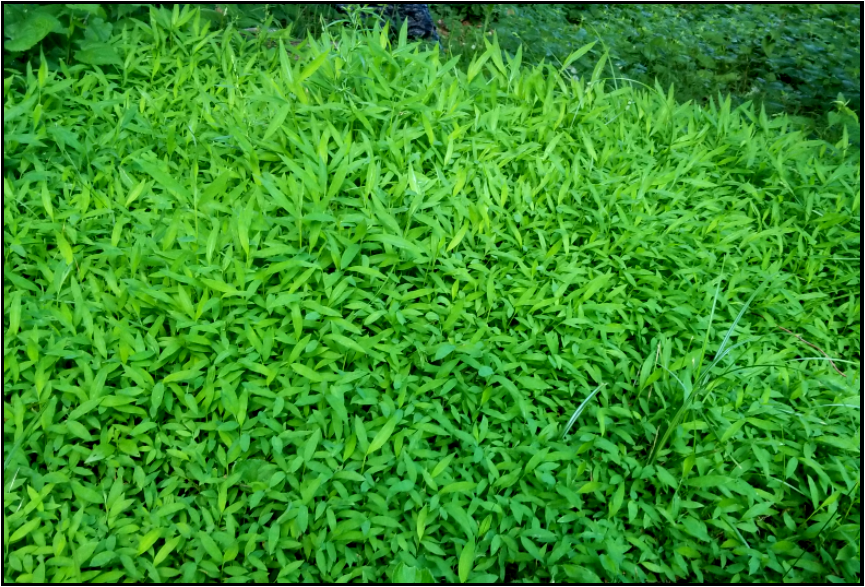
Take Japanese stiltgrass as an example. For gardeners learning how to remove invasive plants, Japanese stiltgrass is one of the most important species to catch early. Early in the season, it can look delicate, almost graceful, like a miniature bamboo with a soft arch. That is part of the problem. It does not announce itself as a villain. But it forms dense mats, it thrives in part shade, and once it seeds, it creates years of pressure. The early tell is the way it spreads into a thin carpet that fills gaps quickly. If you catch it before it seeds, you can reduce the long-term problem dramatically, because it is an annual. In many woodland settings, successful japanese stiltgrass control comes down to interrupting that seed cycle year after year.
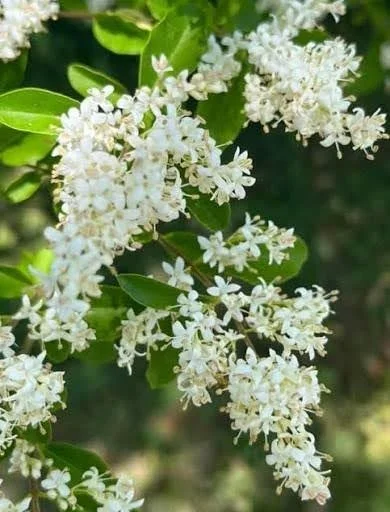
Now consider privet. Privet is the opposite in temperament: a woody shrub that can look like a harmless hedge plant until you see it taking over a woodland edge. Privet often holds leaves longer than many native shrubs, which makes it stand out in shoulder seasons. In summer, the tell is the density and the way it forms thickets that shade out everything else. Cutting privet without follow-up often creates a vigorous resprout. A better approach is to treat it like a repeated intervention: remove the plant, or cut it in a way that prevents the root system from simply sending up a new forest of stems. Knowing how to remove invasive plants like privet requires understanding how aggressively some species resprout after cutting.
Bittersweet and other invasive vines are another category entirely. Vines exploit light. They climb, they shade, they strangle, and they use trees as infrastructure. The early tell is the way a vine races into the canopy and then begins creating curtains of foliage. If you have a vine that is climbing aggressively, do not wait. Vines can do structural damage over time, and they can turn removal into a dangerous job once they are high and heavy. Anyone researching how to remove invasive plants should pay close attention to invasive vines because delays often make removal far more difficult.
Multiflora rose, for many gardeners, is the plant that teaches the lesson of follow-up. You can cut it and feel accomplished. Then you come back and it is taller than you, armed with thorns, and acting like you did nothing. The early tell is the arching thorny cane habit and the way it forms dense, impenetrable patches. Removal is possible, but it is rarely a one-and-done event. It is a series of events timed to weaken the plant and prevent it from replenishing reserves.
Garlic mustard, when it is present, is a classic spring invader, but it still matters in early summer because of seed. It thrives in rich woodland soils, and it can change fungal relationships in the soil that natives rely on. The key is pulling before seed set and disposing of plants carefully so seed is not spread.
Knotweeds along waterways are in a class of their own. If you have them, you already know. They grow with a kind of brute confidence and spread through fragments. With knotweed, careless cutting and dumping can increase spread. The core strategy is to avoid moving plant material and to plan removal and containment carefully, often with professional guidance when infestations are significant.
I could keep listing plants, but I would rather give you a framework for how to remove invasive plants regardless of the species. Invasive control tends to fall into four kinds of work: hand removal of annuals and shallow-rooted plants, repeated mowing or cutting for plants that rely on top growth, cut-and-remove for woody shrubs and small trees, and containment and replacement for areas where disturbance would create more problems than it solves. This framework works because successful invasive plants control depends more on matching the method to the plant than applying the same solution everywhere.
Hand removal works best on annuals, small seedlings, and plants with shallow root systems, especially when soil is moist. The trick is to pull with intention. Remove the crown. Get enough root that the plant cannot simply resprout immediately. Then, and this part matters, disturb the soil as little as you can. Disturbance invites new germination, and in our region the seed bank often contains more invasives than you want to think about. If you pull a patch and leave bare soil, you have created a vacancy sign. The next step is to cover that soil: mulch, leaf litter, or better yet, a living cover that competes.
Repeated cutting or mowing is the middle path for many invasives. You are not trying to kill the plant in one dramatic blow. You are trying to prevent it from photosynthesizing enough to refill reserves. Timing matters. A cut right before seed set is not the same as a cut right after. A cut during active growth can be more weakening than a cut after the plant has hardened. With repeated cutting, consistency is more important than intensity. A few well-timed cuts across a season often do more than one big clearing that you never revisit. If you are learning how to remove invasive plants, this kind of steady pressure is often far more effective than a single large-scale effort.
Woody shrubs and small trees often require a different strategy. This is especially true when dealing with invasive trees in North Carolina, which often develop extensive root systems and persistent resprouting habits. If you cut a woody invasive and walk away, you have often just converted it into a multi stemmed shrub that is harder to remove later. For many woody species, physical removal of the root system is the most definitive approach when feasible. That can mean digging, which is labor. It can also mean using tools that allow you to lever out roots. In some situations, where physical removal is not feasible and the plant resprouts aggressively, people use targeted chemical approaches such as cut-stump treatments. If you go that route, the non-negotiable rule is this: follow label directions and use the smallest, most targeted approach possible, with special care near water. The goal is not to spray the world. The goal is to prevent resprouting in a way that reduces total chemical use over time. Understanding how to remove invasive plants with woody root systems often requires a different strategy than dealing with annual weeds.
Containment is a strategy, too, and it is not cowardice. Some sites are too steep, too erosive, or too close to water to be ripped open without creating a bigger problem. In those places, the best approach may be to suppress invasives while establishing a competitive native cover that stabilizes soil. Think of it as shifting the balance rather than trying to create instant emptiness.
Now, here is the part most people skip, and it is why the work does not stick: follow-up.
Invasives are persistent because their timelines are longer than our attention spans. Many produce seed that stays viable for years. Many resprout from fragments. Many send up new growth from hidden buds after you think you have won. So the sticking strategy is to build a follow-up rhythm that is small and regular.
I like to frame follow-up as three visits: the first removal, the first check a few weeks later, and the season-end check. Those visits do not have to be dramatic. They can be ten minutes with a pair of gloves. But they change everything. They catch resprouts while they are small. They prevent seed set. They keep a patch from re-establishing its dominance. In many cases, follow-up is the difference between temporary clearing and long-term invasive plants control.
Disposal also matters. If you pull an invasive and leave it on the edge of the bed, you may be helping it. Some plants can reroot. Some can mature seed even after pulling. A safe disposal plan depends on the plant, but the guiding principle is to prevent spread. Bag seed-bearing material. Do not dump invasive plant debris in a place where water can carry it. Do not move soil from infested areas to clean areas without thinking about what you are transporting. Proper disposal is an important part of how to remove invasive plants without accidentally creating new infestations elsewhere.
And then there is the finishing move that makes the whole effort feel worth it: replacement.
Bare soil is an invitation. Disturbance invites invasion. If you clear an area and do not fill it with something competitive, you have left a vacancy. In Western North Carolina, nature will fill vacancies quickly. You can decide what fills it. Replacing removed infestations with appropriate native species can help prevent invasive trees in North Carolina from reclaiming the site over time.
Replacement does not have to be fancy. It can be a matrix of native grasses and sturdy perennials that hold space. It can be shrubs that create shade and reduce the light advantage invasives rely on. It can be a layer of leaf litter and woodland groundcovers in shady sites. The best replacement plantings are the ones that match the site conditions and reduce the amount of future intervention required.
There is also a psychological benefit to replacement. If invasive work is only removal, it feels like endless subtraction. If it includes planting, it becomes a creative act. You are not just fighting. You are building.
The last thing I will say is this: choose your scale. Choose the areas that matter most. A garden is not only plants; it is attention. Your attention is finite. The goal is not to be overwhelmed. The goal is to make steady progress that accumulates.
If you want help identifying the specific invasives on your property and building a seasonal plan for removal and replacement that fits your site and your energy, schedule a consultation through the Unicorn Farm Nursery and Landscaping website. I can help you prioritize the zones that will give you the biggest payoff, choose methods that reduce rebound, and design a restoration planting that stabilizes the ground so invasive pressure decreases instead of increases over time.
Warmly,
Logan