Winter Houseplant Care - Light, Humidity, and Airflow in the Dark Months
Dear friend,
Houseplants can feel like little green companions through winter, but winter is also the season when they quietly start to struggle. People often blame themselves—“I always kill plants in winter”—but most of the time it isn’t a personal failure. It’s indoor climate. Understanding winter houseplant care starts with recognizing how your indoor climate shifts with the season.
In summer, many houseplants are forgiving. Light is abundant. Humidity is higher. Air moves more because windows open and the house breathes. In winter, the entire environment shifts, which is why understanding how to care for plants in the winter starts with noticing these changes. Light drops sharply. The sun angle changes. Heaters dry the air. Windows stay shut. Air can get stagnant in corners and too dry near vents. And because growth slows, the margin for error gets thinner—especially around watering.
The good news is that winter houseplant care gets much easier once you stop treating it like a mystery and start treating it like climate control. Not control in the sense of making your house a tropical greenhouse—most of us aren’t doing that—but control in the sense of adjusting a few major variables that govern plant health.
If you can manage light, humidity, and airflow, you’re already following three of the most important winter houseplant care tips. By paying attention to each of these factors, you can prevent most winter problems before they begin.
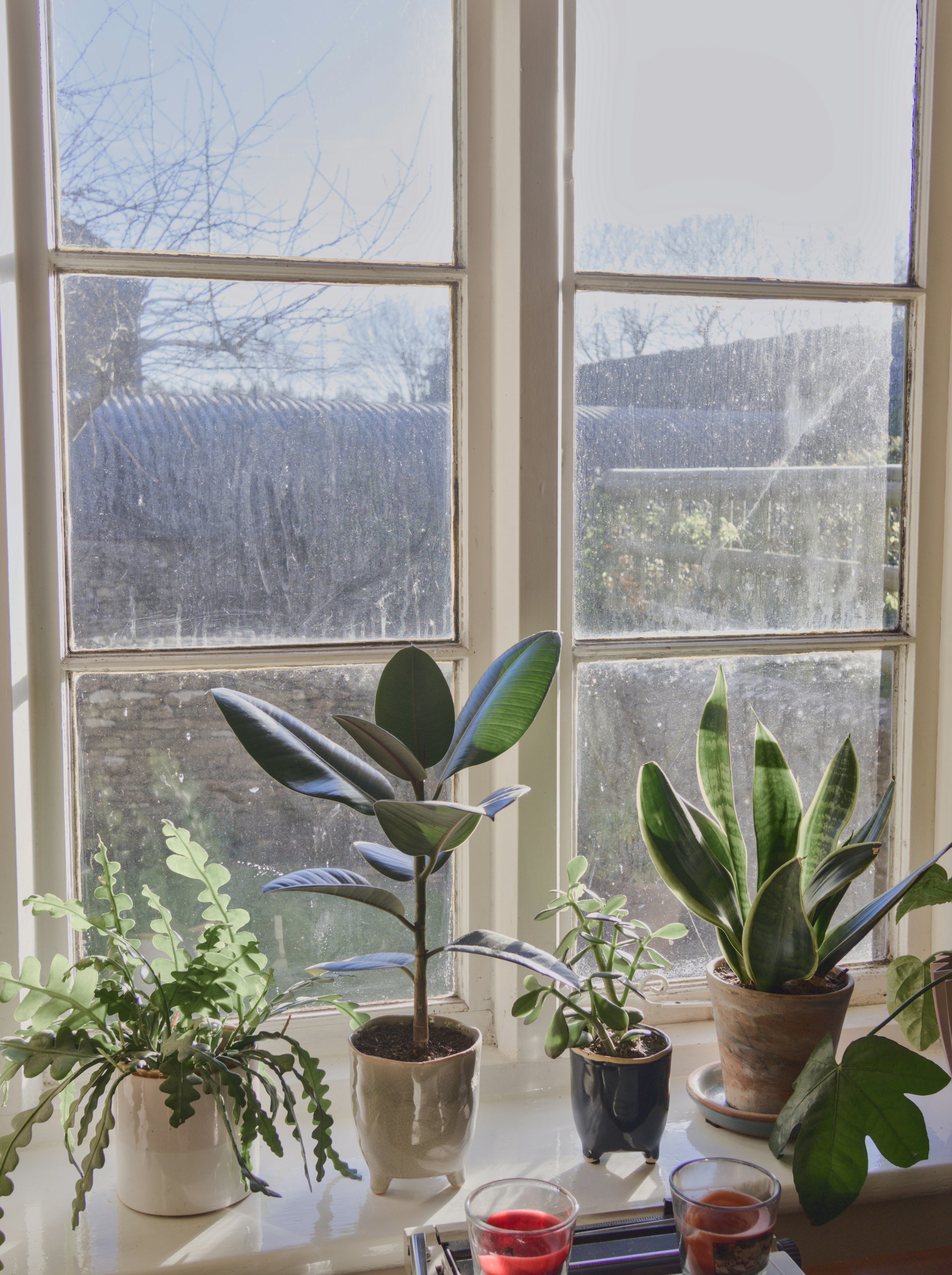
Let’s start with light, because light is the foundation. In winter, a plant’s relationship to light changes even if you never move it. A window that provided adequate light in July may be barely functional in January. The days are shorter, and the sun sits lower. A plant that seemed perfectly happy all summer may start stretching, dropping leaves, or simply pausing.
The first step is to re-map your indoor light in winter terms. You don’t need fancy equipment. You just need to look honestly. Which windows get direct sun, and for how long? Where does bright light actually land during the day? What areas are bright but indirect? What areas are “pleasant for humans” but dim for plants? A lot of houseplant disappointment comes from a mismatch between what feels bright to us and what is bright for photosynthesis. Paying attention to light is a key part of winter houseplant care, especially for plants that need consistent brightness.
In winter, many plants benefit from being closer to the window than you think. It can feel counterintuitive because windows are cold, but light is often the more limiting factor. You can compensate for a bit of cold with placement and awareness, but you can’t compensate for chronic low light without either moving the plant or adding supplemental light.
Now, supplemental light sounds like a commitment, but it can be simpler than people imagine. A single well-placed grow light, used consistently, can change the trajectory of your whole winter plant collection. The goal isn’t to turn your living room into a laboratory. The goal is to give plants enough usable light to maintain health without stretching or shedding.
The second winter variable is humidity. Most tropical houseplants—your philodendrons, pothos, many begonias, palms, orchids—come from environments where humidity is not a rare treat. In a heated winter home, humidity can drop to levels that stress plants even if you water correctly. Low humidity doesn’t just cause crispy leaf edges. It also makes plants more vulnerable to pests like spider mites, because mites thrive in dry, warm indoor conditions. Adjusting humidity is a cornerstone of effective winter houseplant care.
Humidity is tricky because people often try to fix it in ways that don’t meaningfully move the needle. A pebble tray may look charming, but unless you have an entire group of plants creating a local microclimate, its impact is usually modest. Grouping plants together helps more than people realize, because plants release moisture through transpiration, and when they’re clustered, that moisture slightly raises local humidity around the foliage. A humidifier is more direct, but it’s also a maintenance item—something you have to keep clean and filled.
The key is to think in terms of “zones.” If you have a handful of humidity-loving plants, you can create one zone—a corner with a humidifier, a cluster of plants, perhaps a tray to catch water, and a place where airflow is present but not blasting dry heat. These are simple winter houseplant care tips that can make a big difference in keeping your plants healthy through the colder months. You don’t have to raise humidity in the whole house. You just have to create a livable microclimate for the plants that need it.
And while we’re talking about humidity, it’s worth naming the flip side: too much stagnant humidity without airflow can lead to fungal issues. That’s why humidity and airflow are a pair. You want moisture in the air, but you also want gentle movement so leaves dry and the environment doesn’t turn into a stagnant pocket.
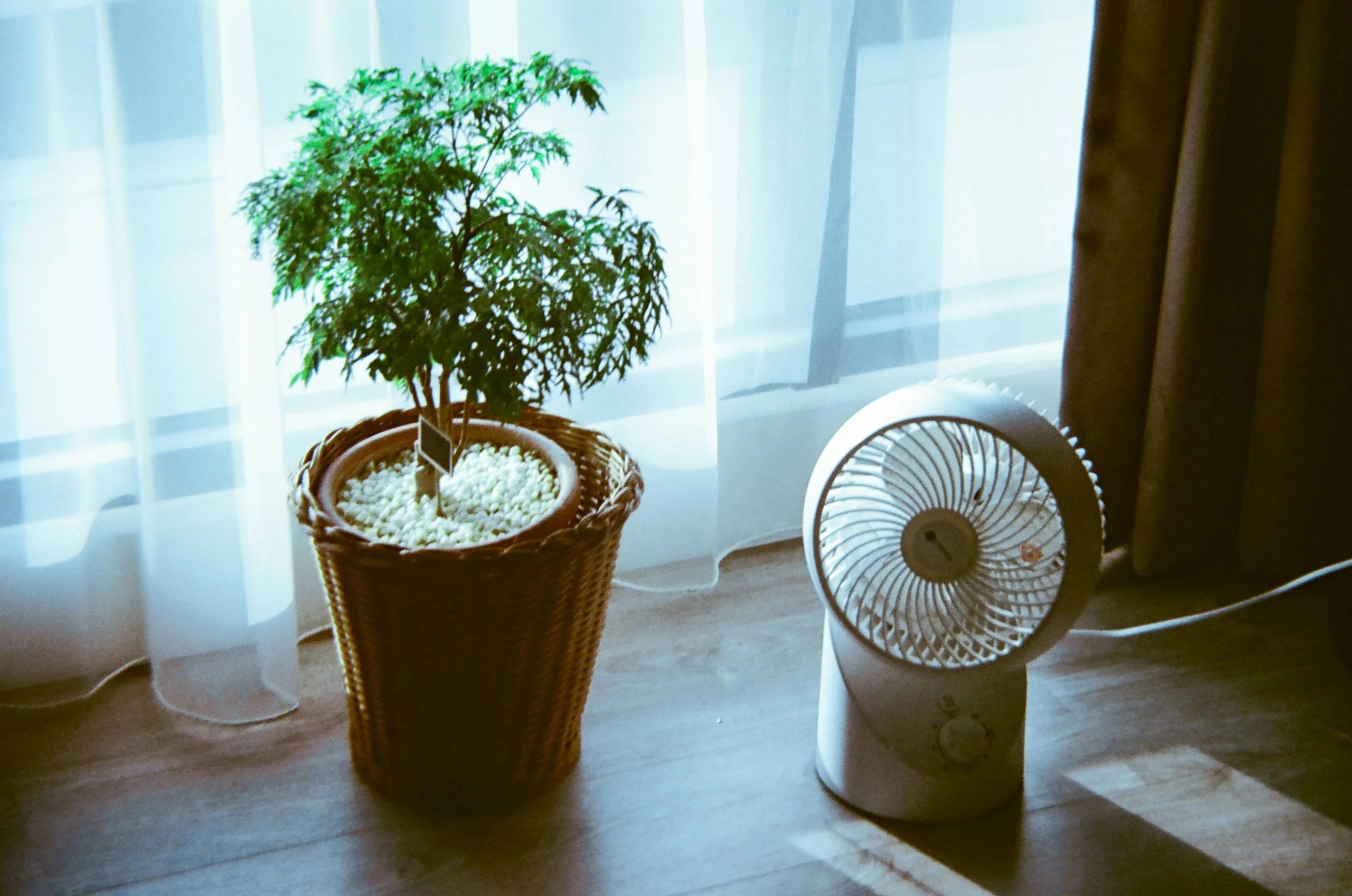
Which brings us to airflow, the most underrated piece of winter care.
Airflow is not about making plants cold. It’s about preventing still, stale conditions where pests and disease thrive. Incorporating gentle air movement is an often-overlooked element of winter houseplant care that pays off in plant health, and where transpiration patterns become unhealthy. In many homes, winter airflow is strange. Some corners are completely stagnant, while other areas are blasted by HVAC vents. Plants placed right in the path of a heating vent may dry rapidly, while plants in a still corner may sit with damp soil longer because the air is cool and unmoving.
This is why two identical plants can behave completely differently in two different spots in the same home.
A gentle fan in a plant area—nothing aggressive, just mild movement—can make an enormous difference. It strengthens stems, discourages fungal issues, and makes pests less comfortable. In my experience, the combination of slightly improved humidity plus gentle airflow is one of the best winter “insurance policies” you can give your houseplants.
Now let’s talk about the winter mistake that catches almost everyone at some point: watering.
In winter, plants use less water because growth slows and evaporation rates change. If you water on a summer rhythm, you can easily overwater without realizing it. Overwatering doesn’t mean “too much water at once.” It means “water too often,” leaving roots without enough oxygen. Root stress in winter often looks like yellowing leaves, leaf drop, and a general sadness that people misinterpret as “it needs more water.”
So the winter approach is to let the soil tell you the truth. Not the surface—because surfaces can be deceptive. Learning to read the soil is one of the subtle practices of winter houseplant care that prevents overwatering mistakes—but the root zone. If the top inch is dry but the root zone is still damp, the plant doesn’t need water yet. If the pot feels light and the soil is dry through the profile, water thoroughly and let excess drain. Winter watering is about deeper intervals, not frequent small splashes.
It also helps to remember that watering is tied to light. A plant in low light will use less water. If you increase light, you often increase water use. That’s another reason to consider your variables together rather than in isolation.
And then there are pests—those uninvited winter houseguests.
Many pest outbreaks are really indoor climate problems in disguise. Maintaining the right humidity, light, and airflow—the basics of winter houseplant care—can significantly reduce pest problems. Spider mites, for example, tend to explode in warm, dry, still conditions. If you improve humidity and airflow and keep plants from sitting stressed in low light, you often reduce mite pressure dramatically. Mealybugs and scale can still show up, especially on stressed plants, but again, stress is the opening they exploit. Healthy plants are not immune, but they are less susceptible and more resilient.
Another winter habit I recommend is a gentle, regular inspection. Not paranoid, just attentive. Look under leaves. Look at new growth. Look at leaf nodes where pests hide. Catching an issue early is the difference between a quick fix and a months-long ordeal.
And while we’re talking about prevention, winter is also the season when new plants come into homes as gifts. This is where quarantine matters. It sounds formal, but it can be as simple as keeping a new plant separate from your main collection for a couple weeks while you watch it. Many infestations begin when a plant that looks fine at first is placed directly next to your healthiest plants. Quarantine is kindness to your future self.
What I want you to hear, more than anything, is that winter houseplant care is less about “being good with plants” and more about learning to read the indoor environment. When someone tells me they can’t keep houseplants alive, I almost always find a solvable pattern: plants are too far from light, humidity is too low, airflow is stagnant, or watering is out of season with growth.
These are not character flaws. They’re variables.
And once you treat them as variables, you gain control without becoming obsessive. You start making small, practical adjustments: moving a plant closer to the window, grouping plants, adding a humidifier in one zone, running a gentle fan, watering only when the root zone is truly ready, supplementing light for the plants you care about most.
The result is that your plants stop merely surviving winter and start holding steady—sometimes even growing. These steps are practical examples of how to care for plants in the winter so they thrive even when conditions are challenging.
Which is a quiet kind of hope, isn’t it? A reminder that even in the darker months, life is still possible when conditions are right.
If you’d like help troubleshooting your houseplant setup—light mapping, humidity strategy, airflow, watering rhythm, and pest prevention—visit our website to schedule a consultation. We’ll help you build a simple, sustainable indoor plant system so your collection stays healthy through winter and takes off again when spring returns.