The Cut-Flower Garden: A Low-Stress Plan for Bouquets From July to Frost
Dear friend,
There is a particular kind of wealth that shows up in July, and it is not money. It is a kitchen table with a jar of water and a bundle of fresh flowers that you cut yourself. The stems are a little wild. The colors do not match any catalog. The whole thing smells like summer and feels like you did something simple and good.
Cut flowers can seem like a hobby for people with infinite time, a hobby for folks who have neat rows and fancy buckets and a schedule built around bloom. But a cut-flower garden does not have to be complicated. In fact, the most successful cut-flower gardens I see are the ones that are deliberately low-stress. They are built around a handful of reliable plants, they are managed with simple routines, and they are designed to produce bouquets from July to frost without turning the gardener into a full-time flower farmer.
In Western North Carolina, the main challenges for a cut-flower garden are the same challenges we face in vegetable gardens: humidity, sudden storms, and the way summer heat can turn a lush patch into a tangle if you do not give it some structure. The good news is that those challenges are manageable. The secret is to design the patch like a system rather than like a collection of pretty plants.
Let’s talk about how to build a cut-flower garden that feels like joy instead of pressure: how big it needs to be, what kinds of plants carry the season, how to keep the patch productive with low drama, and how to harvest in a way that makes the plants give you more.
The first thing to know is that a cut-flower garden can be small and still be generous. You do not need an acre. A single sunny bed, even a strip along a fence, can supply weekly bouquets if it is planted intentionally. Many of the easiest cut flowers to grow thrive in surprisingly small spaces. The key is density and succession. You want enough stems that cutting does not feel like stealing from the plant. You want a few waves of bloom so the patch is not a one-week spectacle followed by silence.
I like to think of a low-stress cut-flower garden as three layers: the reliable workhorses, the supporting cast, and the perennial backbone.
The workhorses are the low maintenance flowers that bloom hard, respond well to cutting, and keep producing through heat. Zinnias, cosmos, and celosia are among the most popular low maintenance flowers to plant. In many gardens, zinnias are the queen of this category. They love heat, they bloom repeatedly if you cut them, and they come in colors that can make even a simple bouquet feel abundant. Cosmos can do similar work, with a lighter, airier feel. Celosia offers texture and durability. Sunflowers offer drama, especially if you choose branching types that keep producing rather than a single giant bloom and done.
The supporting cast includes plants that fill in gaps and add scent, foliage, or unusual shape. Basil is wonderful for this because it smells like summer and makes bouquets feel alive, and if you let a few basil plants bloom, the tiny flowers feed pollinators too. Amaranth adds a rich texture and color. Marigolds can add warmth and also carry a scent that feels like old gardens. Even simple fillers like dill or feverfew can add that airy, delicate look that makes bouquets feel composed rather than clumped.
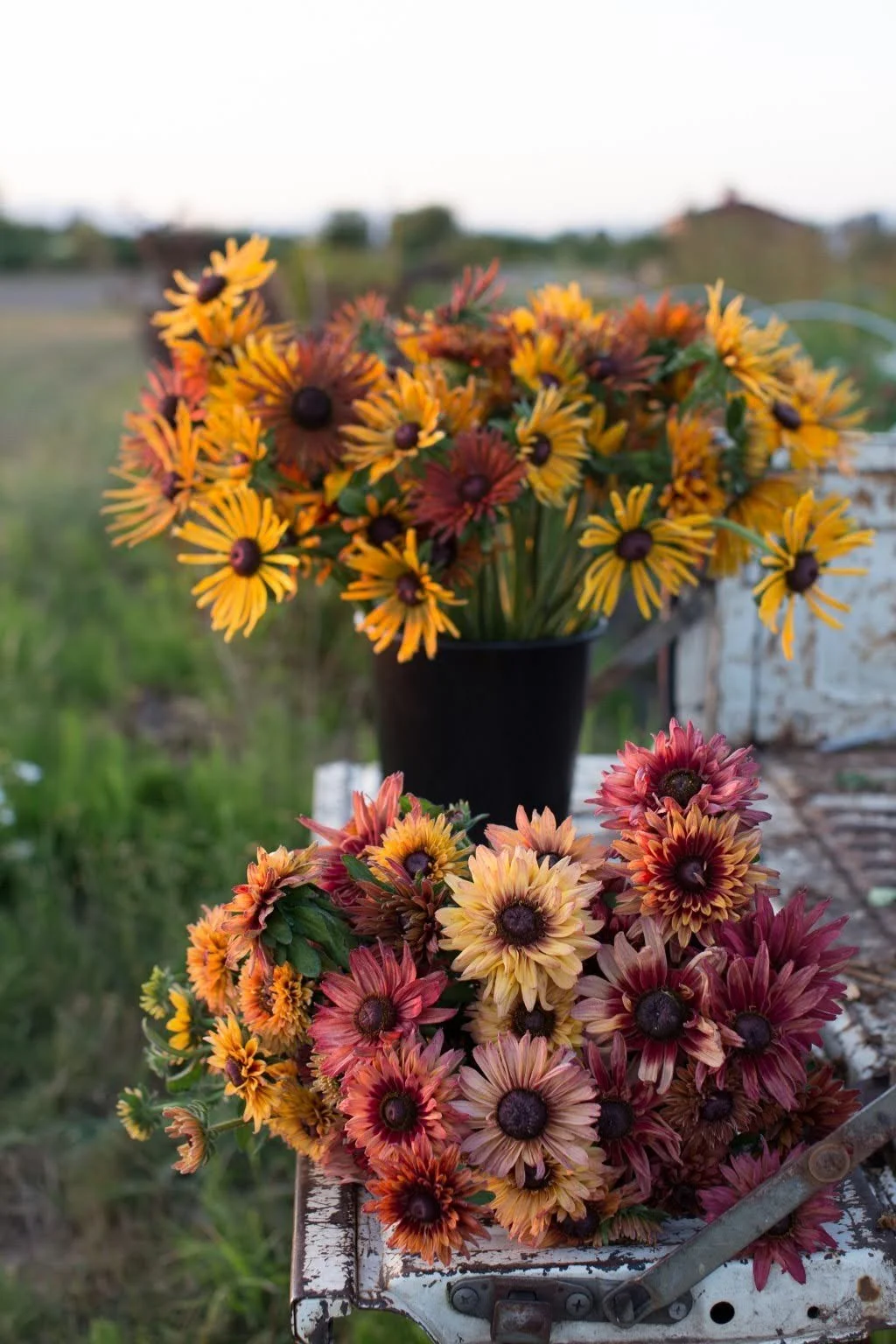
The perennial backbone is what keeps the patch from being entirely dependent on replanting every year. In a low-stress approach, perennials are not the main production engine, but they provide steady stems and structure. Many gardeners rely on cut flower perennials such as Rudbeckia for hardy stems. Echinacea offers strong shapes and seedheads that also feed birds later. Yarrow can be a workhorse in some gardens. Salvias can provide spikes and long bloom. Perennials also support beneficial insects and add resilience to the patch.
Now, the most important design decision is not the plant list. It is the layout.
A cut-flower garden needs airflow. In our humidity, dense plantings can invite mildew and rot if leaves stay wet. You want enough space between rows or blocks that you can walk, harvest, and allow air to move. You also want the patch oriented in a way that captures breeze rather than trapping it. Even a small difference in layout can change disease pressure dramatically.
Support is another key. Many cut flowers, especially tall annuals, benefit from some kind of simple support. This does not have to be fancy. It can be a bit of netting, a few stakes and string, or a fence line that stems can lean against. The goal is to keep plants upright so stems are straight and harvestable, and so rainstorms do not turn your patch into a flattened mess.
Now let’s talk about succession, because succession is what takes a patch from beautiful to dependable.
If you sow or plant everything at once, you often get a glorious flush and then a lull. A low-stress plan staggers plantings so you have a continuous supply of new stems. This can be as simple as sowing a small patch of zinnias every couple of weeks for a month, or planting a second round of sunflowers once the first is established. It can also mean choosing varieties with different bloom times so the patch naturally spreads out its show.

In June, you can still set yourself up for July bouquets by planting fast annuals now. Several of the easiest cut flowers to grow are warm-season annuals that establish quickly. Even if you are late to the party, you can still get a season of bloom. The key is to plant into warm soil, keep moisture steady during establishment, and then keep harvesting to encourage branching.
Harvesting is the part that turns a flower patch into a bouquet patch. Cutting is not just taking. Cutting is training.
Many annual flowers respond to cutting by branching. When you cut a zinnia stem above a pair of leaves, the plant sends out side shoots. Those side shoots become new stems. If you do not cut, the plant may still bloom, but it can become lanky and less productive. Regular harvesting keeps the plant in production mode.
Timing matters. The best time to cut is often early morning or in the cool of evening, when stems are fully hydrated. You want clean cuts and clean buckets. You want to get stems into water quickly. If you harvest in the heat of day and then leave stems on a table while you get distracted, you can shorten vase life dramatically.
Conditioning is a quiet practice that makes your bouquets last. It means stripping leaves that would sit in water, recutting stems, and letting flowers drink in a cool, shaded place before you arrange them. It does not have to be a production line. It can be a simple routine. But it changes the experience from flowers that wilt in two days to flowers that hold for a week.
Now, disease and pest management in a cut-flower garden is mostly about two things: airflow and sanitation.
If you space plants, support them, and avoid overhead watering late in the day, you reduce many problems. If you remove heavily diseased foliage and do not leave rotting plant material to fester, you reduce disease pressure. If you avoid over-fertilizing, you reduce that soft, lush growth that attracts pests and collapses in storms.
There is also the issue of deer, which we cannot ignore. Many cut flowers are tempting. If deer pressure is high, you may need to protect the patch, at least during establishment. The low-stress version of this is to fence a small patch rather than trying to make the whole yard deer-proof. A modest fenced cut-flower bed can be a sanctuary of abundance in a landscape where browsing pressure is real.
The most important emotional advice I can offer is this: do not make your cut flower garden perfect. Make it generous.
A low-stress flower patch is allowed to be a little wild. It is allowed to have a few crooked stems. It is allowed to have a week where you do not harvest and the patch looks overgrown, and then you come back and cut hard and it rebounds. This is gardening, not a performance. A successful cut flower garden is often built around low maintenance flowers rather than high-maintenance showpieces.
And there is something deeply grounding about cutting flowers for your own home or for a friend. It makes the garden feel like it is giving back in a tangible, immediate way. It is not just something you maintain. It is something that feeds your life.
If you would like help designing a cut-flower garden that fits your space, your schedule, and your goals for bouquets from July to frost, schedule a consultation through the Unicorn Farm Nursery and Landscaping website. I can help you choose a reliable plant palette for Western North Carolina conditions, lay out the patch for airflow and harvest ease, and build a simple succession plan so you have steady stems without turning your summer into a constant scramble.
A low-stress flower patch starts with soil that is good enough. Healthy soil helps cut flower perennials return stronger each year. You do not need perfect soil, but you do want a bed that drains reasonably and holds moisture evenly. A simple topdress of compost and a light mulch around young plants can make the patch far more forgiving. If you are building a new bed, keep it narrow enough that you can reach in without stepping; a bed around four feet wide is a sweet spot for many gardeners.
Many of the best cut flowers are direct-sown once soil is warm. If you want an earlier start, you can begin a few trays and transplant, but do not let complexity become the barrier. The low-stress approach is to choose plants that forgive you and then support them so storms do not flatten your work. A bit of netting or a few stakes and string can keep tall annuals upright without turning your patch into a construction site.
Harvesting is what turns a flower patch into a bouquet patch. Cutting is training. Many annuals branch and produce more stems when you cut above a pair of leaves. Cut in the cool of morning or evening, get stems into water quickly, and strip leaves that would sit below the waterline. That simple conditioning routine is often the difference between flowers that last two days and flowers that hold for a week.
If deer pressure is high, protect the patch. The low-stress version is to fence a small bed rather than trying to defend the whole yard. A modest fenced cut-flower strip can become a sanctuary of abundance.
If you would like help designing a cut-flower garden that fits your space, your schedule, and your goals for bouquets from July to frost, schedule a consultation through the Unicorn Farm Nursery and Landscaping website. I can help you choose a reliable plant palette for Western North Carolina conditions, lay out the patch for airflow and harvest ease, and build a simple succession plan so you have steady stems without turning your summer into a constant scramble.
Succession is the quiet tool that keeps the patch generous. Instead of sowing everything in one weekend, you make two or three smaller sowings of your main producers a couple of weeks apart. The first planting gives you the first rush of stems. The next planting takes over as the first slows down. You do not need a spreadsheet. You just need the habit of planting a little more while the soil is warm and the season is long. In late summer, when some plantings begin to tire, you can also shift your bouquet style by leaning more on texture and foliage: seedheads, herbs, and the sturdy stems that hold even when petals are past their peak. That is how bouquets keep coming all the way to frost without the patch feeling like it has to be perfect every day.
Warmly,
Logan